HOW IT WORKS

Sample. Recover. Refine.

The whole sequence, and what you hold, and what paperwork you receive, at the end of each step.

FOUR MACHINES

Four machines, one job each.
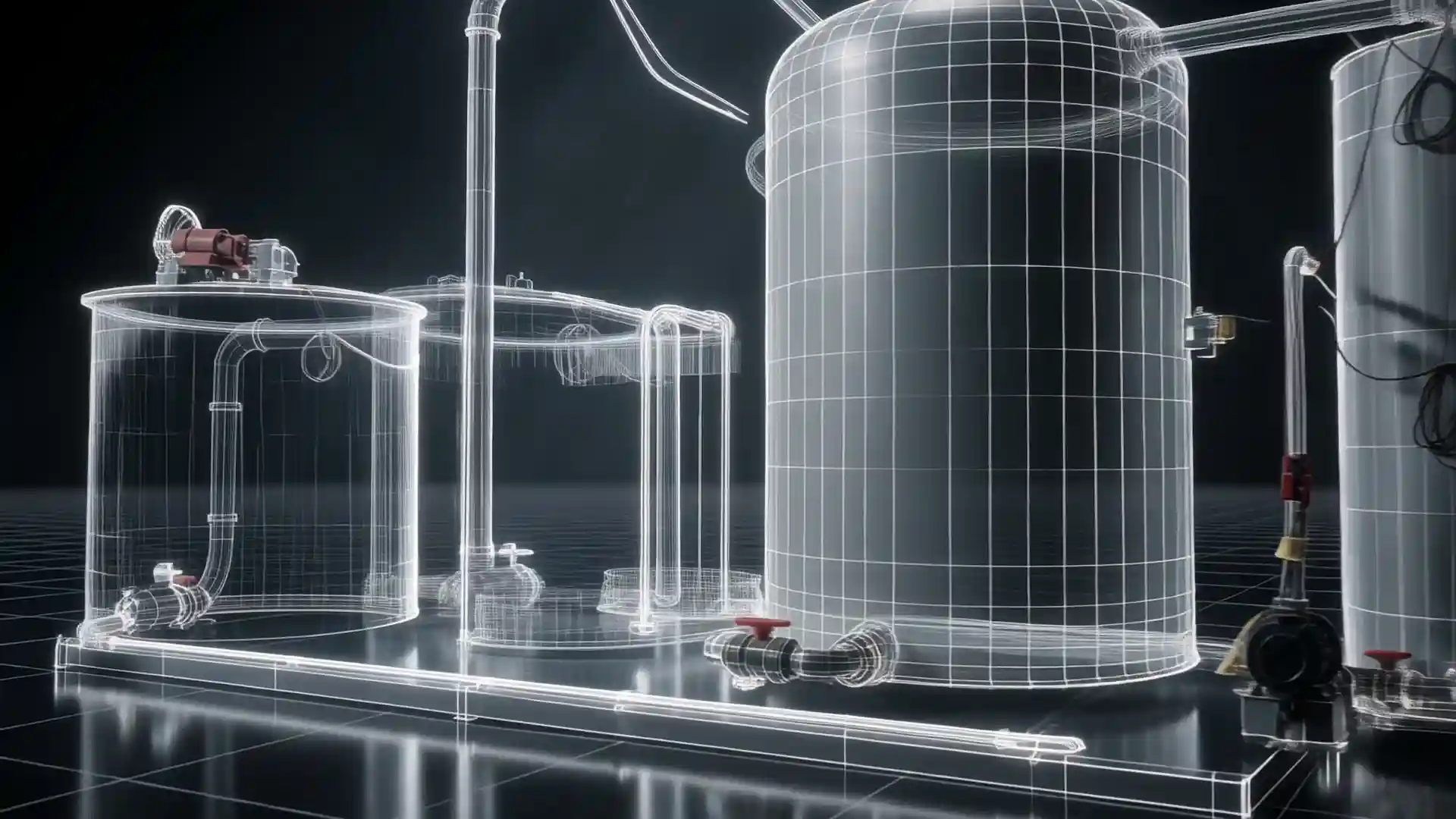
Wireframe render of the chemical treatment tanks used in recovery

The treatment tanks that the sequence below runs through.

These four machines do not sit in a single line on the plant floor. Each one does a specific job on the material as it moves through the sequence below, and that sequence is what matters, not the layout of the room.

STAGE ONE

Sample.

Before anything is dissolved, we check whether it qualifies, and log it in.

  1. 01 Intake. Scheduled material arrives under a monthly DOE quota, tracked by consignment. In: pallets or drums of the material you send us. Out: a signed record naming the licensed receiver.
  2. 02 Acceptance assay. A handheld FJ-HH5 checks the material against our waste acceptance criteria before we accept a gram. The reading is non-destructive, nothing changes shape. In: a sample from the batch. Out: a pass or fail against the criteria for that stream, and a quote if it passes.

STAGE TWO

Recover.

Qualifying material stops being a solid and becomes a measured number.

  1. 01 Dissolution. Qualifying material goes into a chemical treatment tank. Metal leaves the solid and enters solution. In: accepted lead frames, ICs or other qualifying scrap. Out: a solution carrying the metal, invisible to the eye.
  2. 02 Assay the solution. A FJ-AS50 atomic absorption spectrometer measures how much metal is in that solution, in parts per million. Out: the input reading, the number every batch is anchored to.
  3. 03 Electrolytic recovery. A FJ1000 pulls the metal back out of solution and deposits it onto a titanium drum. In: the assayed solution. Out: a growing metal crust on the drum.
  4. 04 Weigh the evidence. The drum is weighed before recovery starts and again after. Out: a before and after drum mass, the plainest proof of what came out.
  5. 05 Verify depletion. The FJ-AS50 re-assays the treated solution to confirm how much metal is left. Out: the output reading, paired with the input reading to show the fall.
  6. 06 Peel the cathode. The deposited crust is stripped from the drum by hand, ready for refining.

STAGE THREE

Refine.

The stripped metal becomes a cast, verified ingot.

  1. 01 Melt and cast. The stripped metal is melted with flux, impurities are skimmed off, and it is cast into an ingot.
  2. 02 Verify purity. A benchtop FJ-PT5 gives a non-destructive purity reading on the cast ingot. Out: the purity figure recorded against that ingot. Our stated recovery purity is 99.8%.

GET STARTED

Find out what your waste is worth.

Send us a sample. We assay it and tell you what is in it. No cost, no obligation.

Get a free waste assessment